When purchasing an electric screw air compressor for industrial use, one of the most common dilemmas is choosing between a permanent magnet variable‑frequency drive (VFD) screw compressor and a fixed‑speed (constant‑frequency) screw compressor. At first glance, the price gap is obvious—the VFD model typically costs 30‑50% more upfront. Yet, experienced plant managers know that the initial purchase price is only the tip of the iceberg. The real difference lies in operating costs, energy efficiency, and long‑term reliability. To make a sound, data‑driven decision, you should evaluate your specific situation through three critical lenses: gas‑demand stability, operating hours and electricity tariffs, and environmental/maintenance conditions. Let’s break down each point in depth.
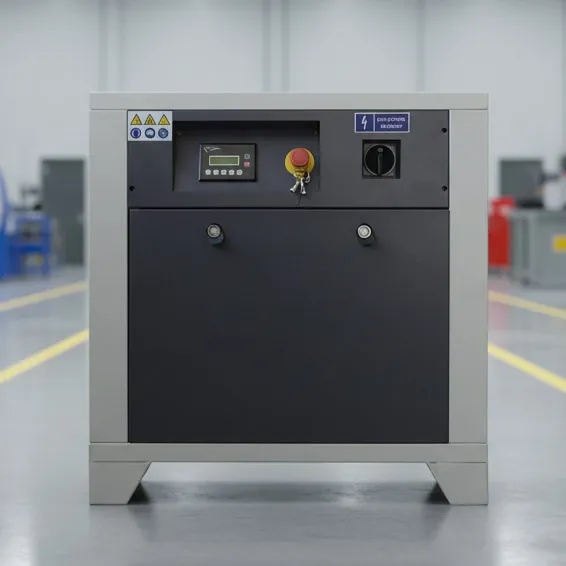
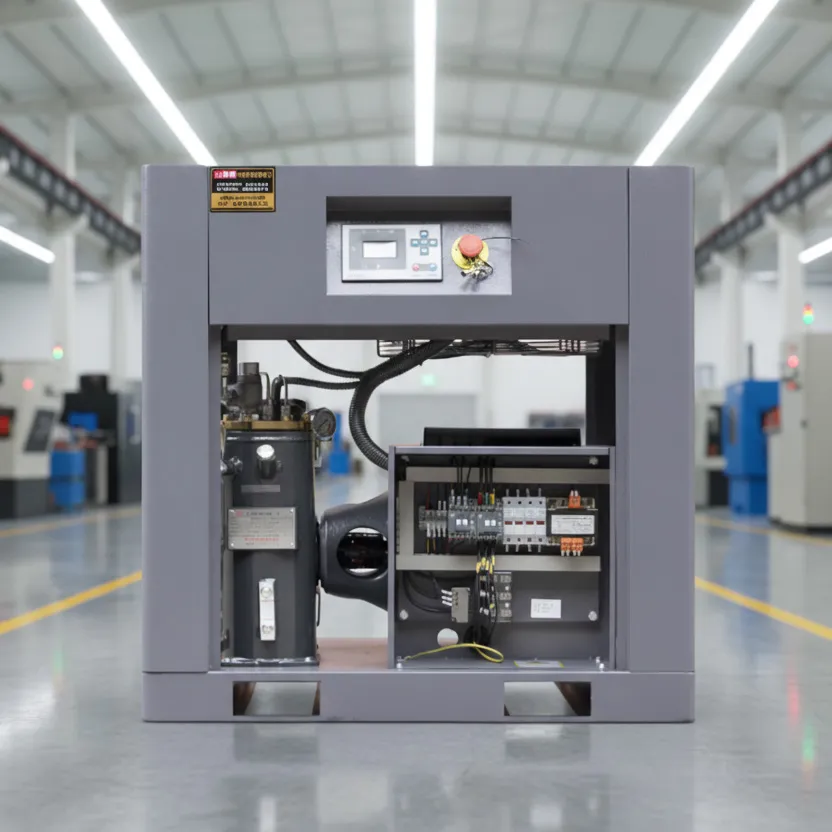
This is the single most important criterion—and the one most often misunderstood. A compressor’s efficiency is not a fixed number; it depends on how well its output matches your real‑time consumption.
· Stable, continuous demand – If your production runs on a single, uninterrupted line (e.g., 24/7 injection molding, textile weaving, or chemical processing) where the air pressure and flow remain nearly constant, a fixed‑speed compressor is an excellent workhorse. It operates at its rated motor speed all the time, staying close to its optimal efficiency point (usually 85‑95% of full load). There is no additional inverter loss, no complex control logic, and the purchase cost is significantly lower. Maintenance is straightforward, and repair parts are widely available. For such cases, the VFD model would be overkill—you would pay more for features you rarely use.
· Highly variable demand – In contrast, many modern factories have multi‑shift operations, batch processes, or seasonal product mixes. For example, a tire plant may use high air volume during curing in the morning, moderate flow during assembly in the afternoon, and only low‑pressure cleaning at night. A packaging line may have intermittent blowing stations that turn on and off randomly. In these scenarios, a fixed‑speed machine wastes enormous energy during unload periods—it still runs at full speed but closes the inlet valve, consuming 30‑70% of its full‑load power while producing zero useful air. A permanent magnet VFD compressor, however, continuously adjusts the motor speed via a built‑in inverter, precisely tracking the pressure setpoint (e.g., ±0.01 MPa). The motor torque remains high even at low speeds thanks to the permanent magnet rotor, which eliminates excitation losses. Field data from hundreds of installations show that VFD units achieve energy savings of 20‑40% compared to fixed‑speed units in variable‑load conditions. The payback period is often 1.5‑2.5 years, after which every kilowatt‑hour saved goes straight to your bottom line.
So, before you decide, install a flow meter or review your production schedule for a week. Plot the air consumption curve. If it resembles a flat line, go fixed‑speed; if it looks like a roller coaster, VFD is your ally.
Air compressors are notorious energy guzzlers. In the total cost of ownership (TCO) over a 10‑year lifespan, electricity accounts for 70‑80% of all expenses—far outweighing the purchase price (roughly 10‑15%) and maintenance (5‑10%). This arithmetic dramatically shifts the value proposition.
· Long operating hours (≥16 hours/day, 300+ days/year) – Suppose your compressor runs 6,000 hours annually. At an average power of 100 kW and an industrial electricity rate of $0.12/kWh, the annual electricity bill is $72,000. If a VFD model saves 25% energy, that is $18,000 per year. Even if the VFD unit costs $8,000 more upfront, the extra investment is recovered in less than six months. Over five years, the net savings exceed $80,000. In regions with high tariffs—such as parts of Europe ($0.20‑0.30/kWh) or Japan—the savings are even more dramatic. For operations that run continuously across three shifts, the VFD is not an option; it is a financial necessity.
· Short operating hours (≤8 hours/day, single shift, or seasonal use) – If your compressor only runs 2,000 hours per year, the total electricity cost is proportionally lower. A 25% saving on a $24,000 annual bill is $6,000—still meaningful, but the payback period for the VFD premium extends to 1.5‑2 years. If your budget is tight or if the compressor is a backup unit, a fixed‑speed machine may be the more pragmatic choice. Additionally, some older factories have limited transformer capacity; a fixed‑speed direct‑on‑line starter has lower in‑rush current than a VFD’s soft‑start (though modern VFDs also have ramp‑up features). In short, calculate your annual energy consumption (kW × hours × load factor) and multiply by your local rate. Then apply a conservative 20% saving factor. Compare that with the price difference—this simple ROI calculation will clarify the direction.
Permanent magnet motors are technologically advanced, but they come with a caveat: thermal sensitivity. The rare‑earth magnets (typically neodymium‑iron‑boron) have a maximum operating temperature, usually around 150‑180°C for the magnet’s Curie point, but practical safe limits are much lower—often 120‑130°C to prevent irreversible demagnetization. Once demagnetized, the motor loses torque and efficiency permanently, and replacement is expensive.
· Harsh, hot, or poorly ventilated environments – If your compressor room is cramped, lacks fresh air ducts, or sits next to furnaces or kilns, the ambient temperature may exceed 40‑45°C. Even with a dedicated cooling fan, the internal motor temperature can rise rapidly under continuous load. In such cases, a fixed‑speed induction motor (asynchronous AC motor) is far more robust. It has no permanent magnets, tolerates higher winding temperatures, and its insulation class (F or H) is well‑proven. The controller is simpler—no complex inverter board, no electrolytic capacitors that age with heat, and no high‑frequency switching noise. Maintenance is limited to regular oil/filter changes and belt or coupling checks. Spare parts are ubiquitous and affordable.
· Clean, cool, and well‑maintained plants – Conversely, if you have an air‑conditioned compressor room with ambient temperatures below 35°C, good airflow, and regular cleaning of radiators, the VFD unit will thrive. Many modern VFD compressors also come with built‑in temperature sensors and over‑temperature protection that reduce speed or shut down before demagnetization occurs. Still, you must be diligent: keep the cooling fins clear, change the cooling oil on schedule, and monitor the motor temperature through the controller. Additionally, VFD systems have more electronic components, so you need skilled technicians for troubleshooting—or a service agreement with the supplier. For plants with limited maintenance expertise, the fixed‑speed machine’s simplicity is a clear advantage.
There is no universally “better” choice—only the right fit for your unique production profile.
· Choose the permanent magnet VFD screw compressor if: your air demand varies widely across shifts or seasons; your equipment runs more than 16 hours per day; your electricity cost is above $0.10/kWh; and your compressor room is clean, cool, and well‑ventilated with a reliable maintenance team. In these conditions, the energy savings will rapidly outperform the higher initial investment, and the payback will be short and sweet.
· Choose the fixed‑speed screw compressor if: your production process has a steady, predictable air consumption; daily running time is under 8‑10 hours; your budget for capital expenditure is limited; or your site has poor cooling, dusty conditions, or limited access to specialized VFD repair services. The fixed‑speed machine offers proven durability, lower first cost, and easier upkeep—delivering dependable service without unnecessary complexity.
Ultimately, the decision is not about technology for technology’s sake. It is about total cost per cubic meter of compressed air over the machine’s lifetime. Do the math, audit your real demand, and inspect your facility’s conditions. A well‑chosen compressor doesn’t just supply air—it supplies profit. Conversely, a mis‑matched machine will bleed money through wasted electricity, premature failures, or unproductive downtime. By applying these three key criteria—demand fluctuation, operating hours & energy cost, and environment & maintenance—you will make a confident, economically sound choice that serves your production for years to come.
 Hot News
Copyright © Quzhou Mazellion Heavy Industry Technology Co., Ltd. All Rights Reserved — Privacy Policy

 EN
EN