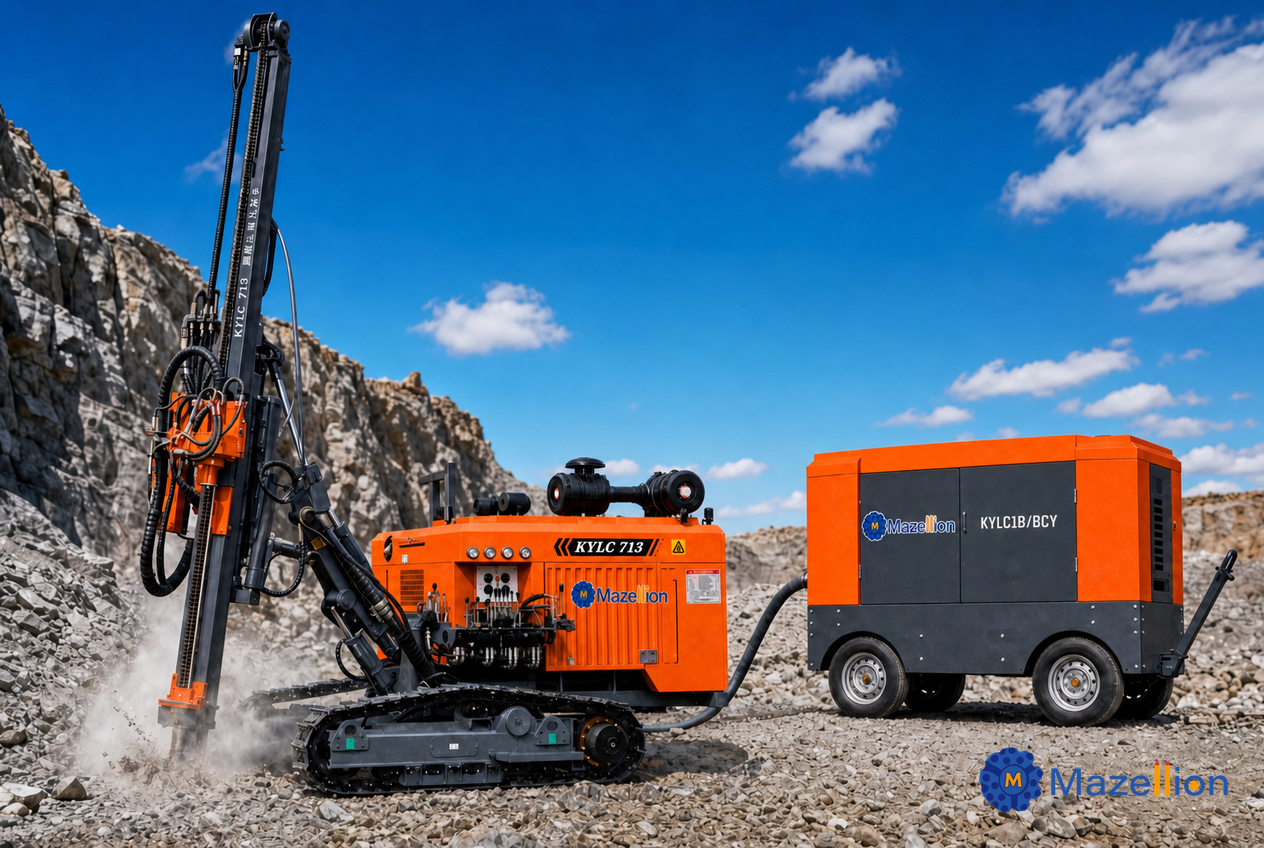
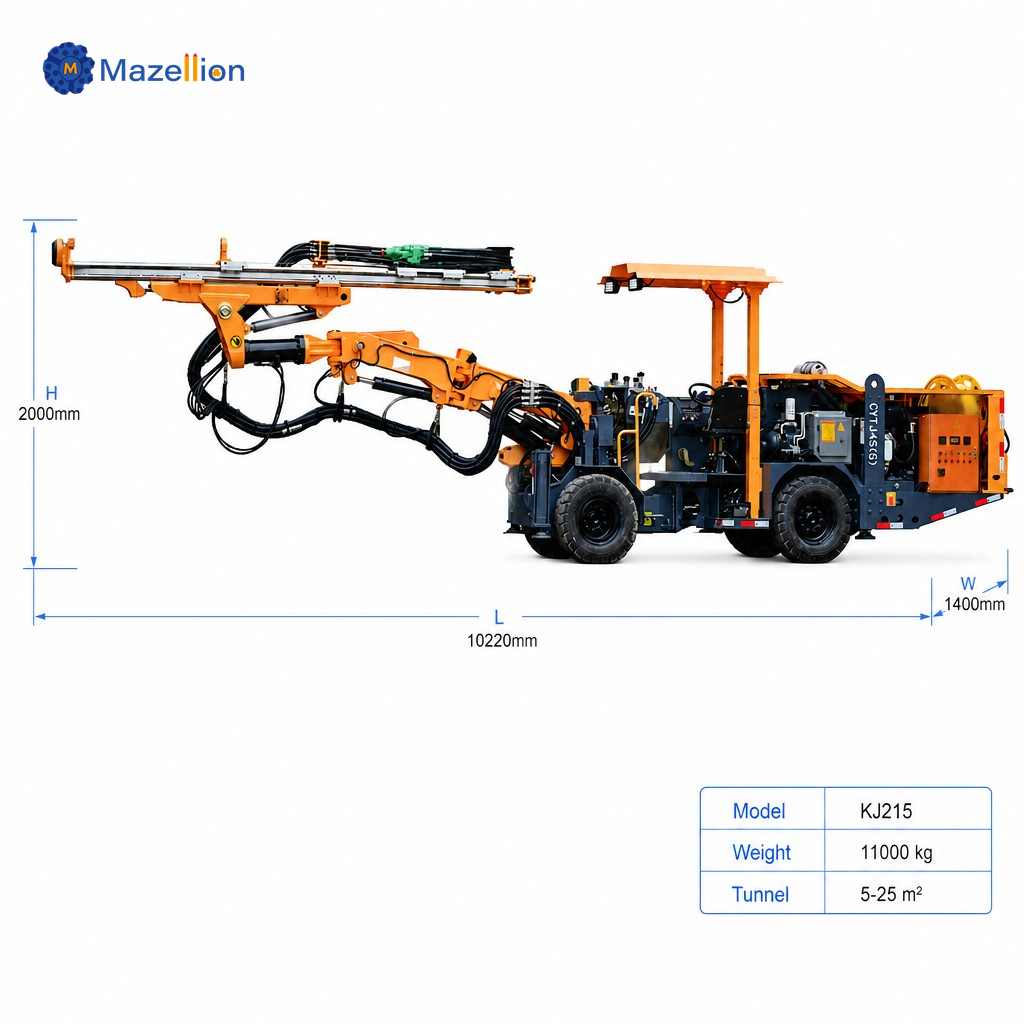
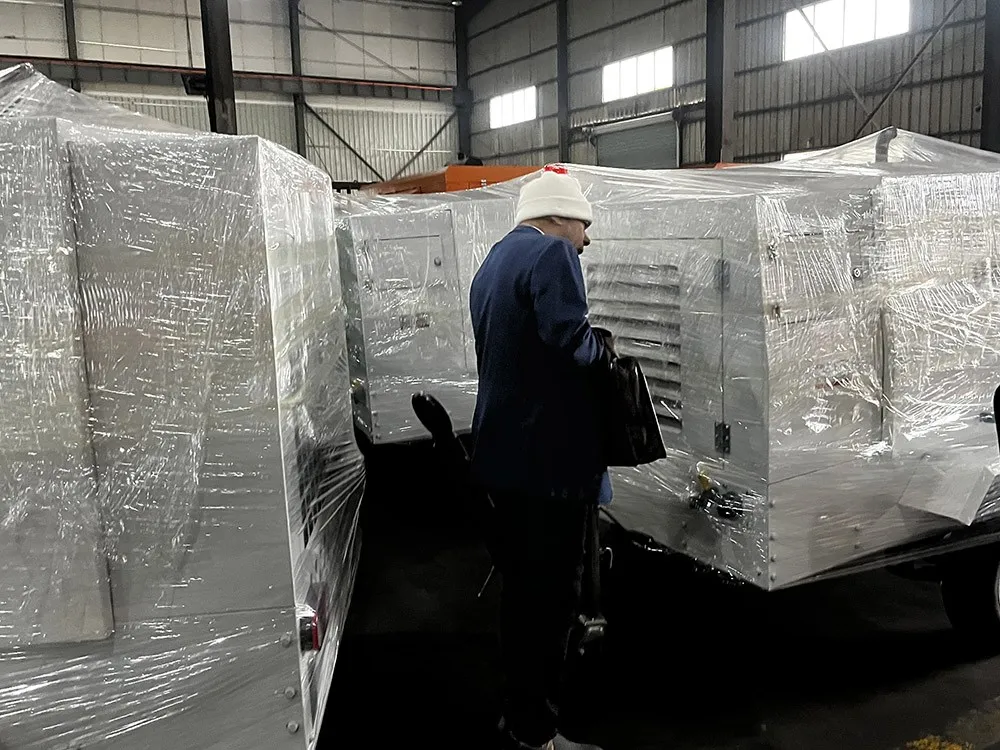
On the afternoon of November 30th, we had the great pleasure of welcoming Mr. Schmidt, a valued customer from Bangladesh, to our manufacturing facility. This visit was far more than a routine factory tour; it was a comprehensive, hands‑on evaluation of our production capabilities, quality control systems, and technological synergy across product lines. Mr. Schmidt had previously placed an order for ten diesel‑powered screw air compressors, and his primary goal was to conduct an on‑site pre‑shipment inspection. However, as the visit unfolded, it evolved into a deep dialogue about our entire equipment ecosystem—from the power source to the working tool—and laid a solid foundation for a long‑term partnership.
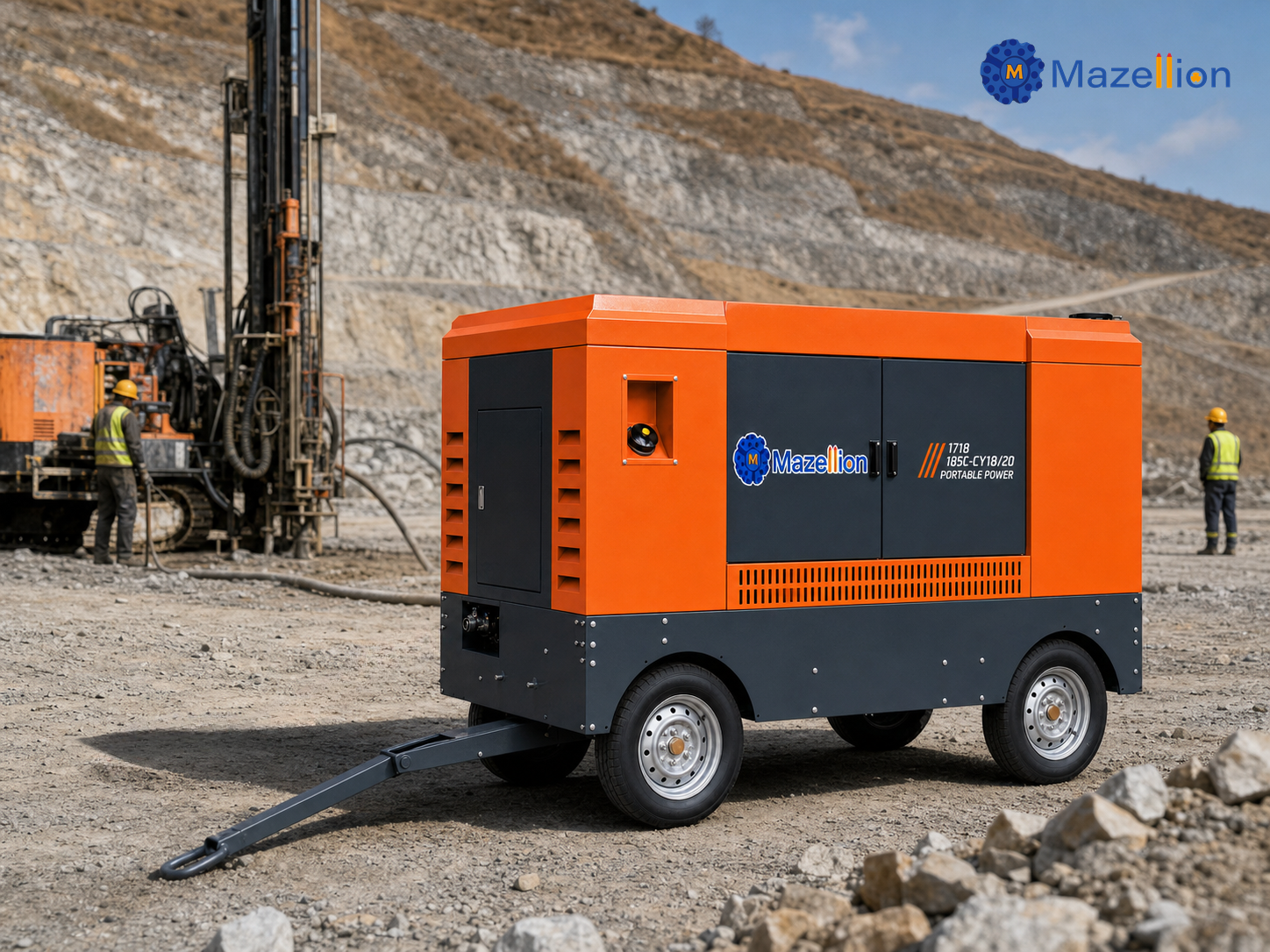
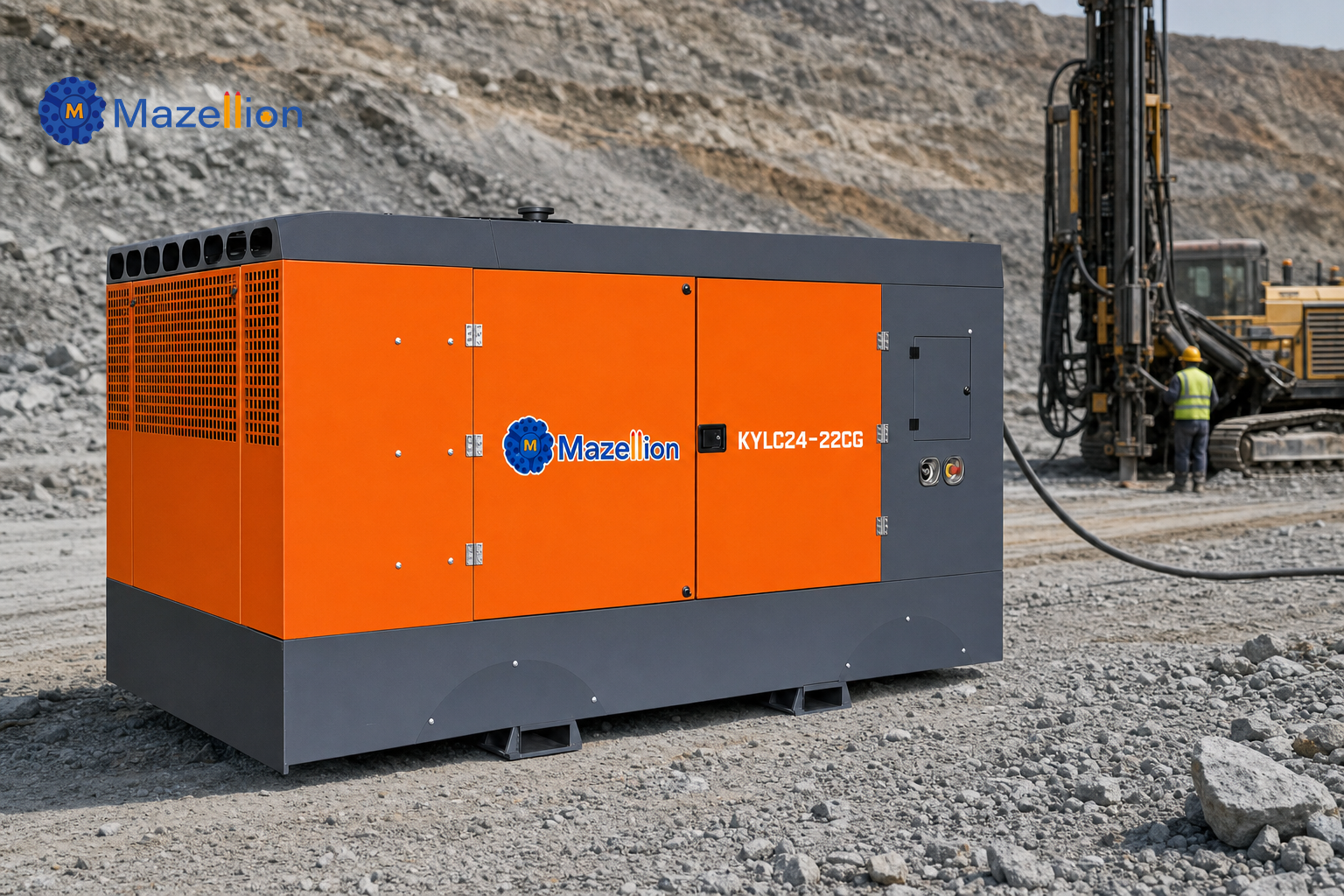
The tour began in our main assembly workshop, where the ten air compressors stood neatly in a row, each undergoing its final series of stringent tests before being packaged for shipment. These machines are not ordinary compressors; they are heavy‑duty diesel‑driven units designed for demanding construction and mining applications in South Asia, where grid electricity is often unreliable. Mr. Schmidt, who has over 15 years of experience in procurement and equipment maintenance, approached each unit with a keen, critical eye. He carefully examined the welding seams on the air receiver tanks, checking for uniformity and penetration—critical factors for pressure vessel safety. He traced the piping layout, inspecting the routing of oil and coolant lines, and paid special attention to the quality of the hose fittings and clamps, which are common failure points in rough operating conditions.
What truly impressed him, however, was the noise and vibration test station. Our technicians had already run each compressor for two hours at full load and partial load, recording decibel levels and harmonic vibrations. The digital display showed noise readings consistently below 78 dB(A) at one meter—well within the stringent environmental norms of Bangladesh’s urban construction sites. Mr. Schmidt leaned in, studied the real‑time graphs, and then turned to our quality manager with a smile. “These figures are even better than we expected,” he remarked. “Especially the energy consumption performance under low‑load conditions. Our local regulations are becoming stricter on fuel efficiency and emissions, and these data fully meet—and even exceed—our national standards.” He also appreciated the redundant safety systems, including high‑temperature shutdown and low‑oil‑pressure alarms, which he noted would significantly reduce unscheduled downtime on his projects.
Beyond the hardware, Mr. Schmidt was equally interested in our testing protocols. We explained that each compressor undergoes a 48‑hour continuous run‑in test with simulated load cycles, followed by a detailed performance curve calibration. Our test bench is certified to ISO 1217 standards, and every measurement is digitally recorded and traceable. This transparency reassured him that we are not a “batch‑and‑ship” factory but a manufacturer that treats quality as a non‑negotiable discipline. He spent nearly an hour in the workshop, taking notes and photographs, and even requested to see the spare parts inventory and the maintenance log of our own production equipment—a sign that he values consistency over empty promises.
After the workshop inspection, we moved to our conference room for a more strategic conversation. Our business manager, Ms. Xu, opened the discussion by reviewing the technical specifications of the air compressors and confirming delivery schedules, but she quickly shifted the focus to a broader perspective. She projected a series of diagrams showing our company’s full product portfolio—not just air compressors, but also hydraulic rock drills, pneumatic breakers, and drilling rigs. This was a deliberate move, because we knew that Mr. Schmidt’s company is not only a buyer of compressed air equipment but also a contractor involved in hard‑rock excavation, tunneling, and quarrying.
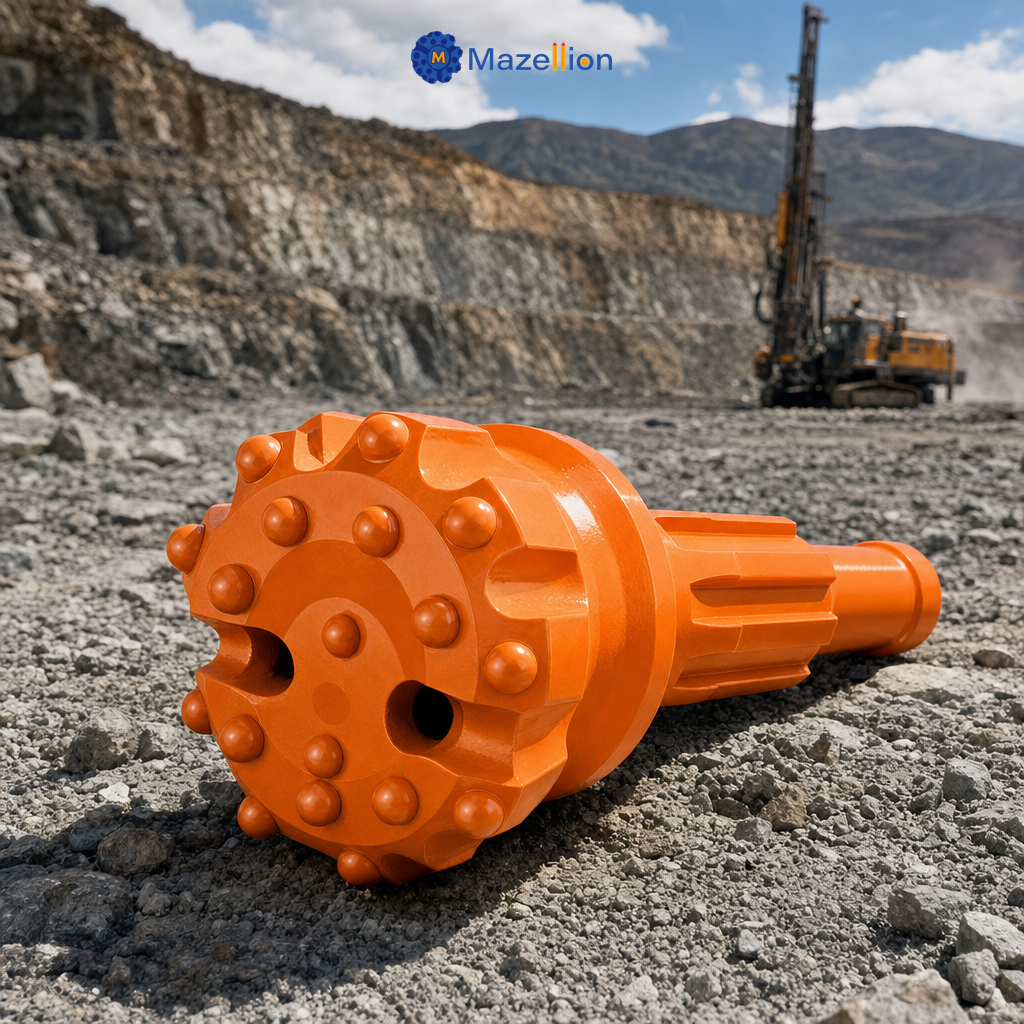
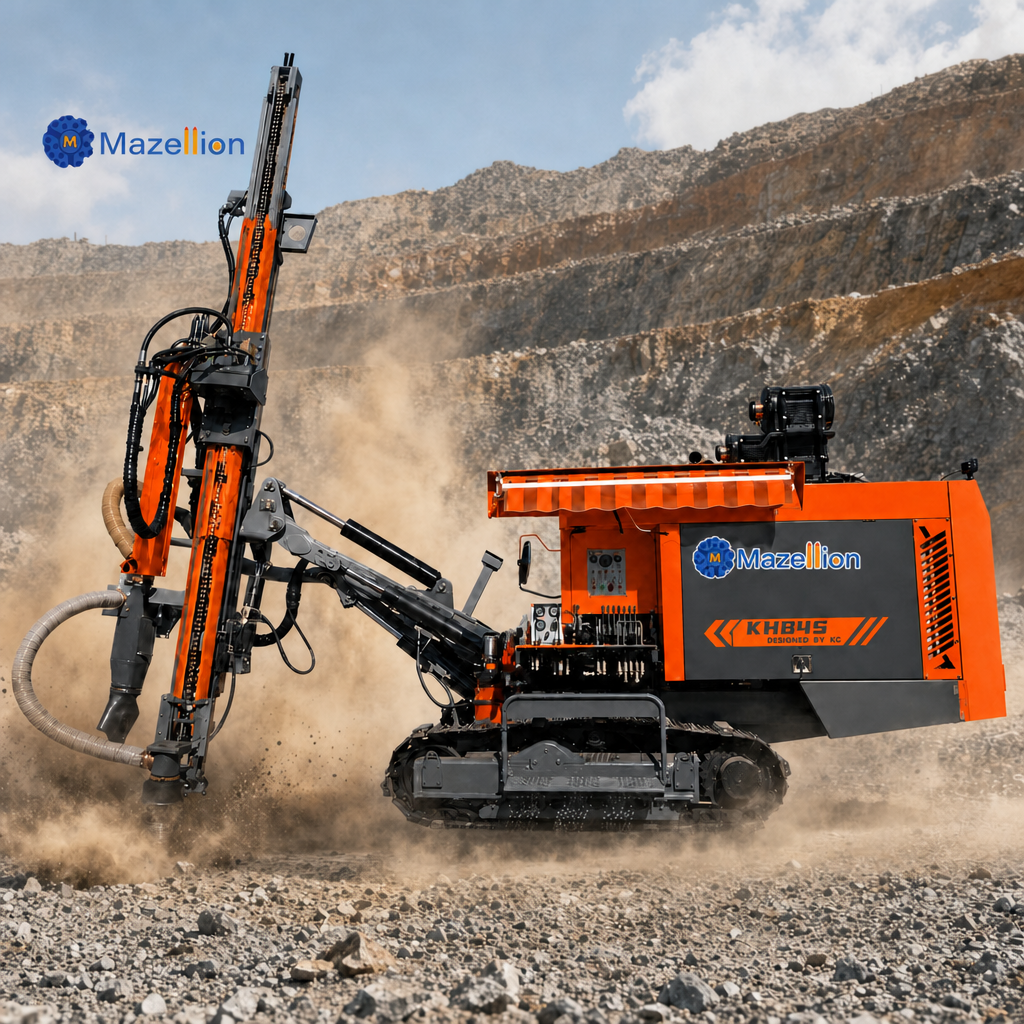
Ms. Xu pointed to a cross‑section animation of our top‑selling rock drilling machine and explained: “The air compressors you see here are the ‘heart’ of our rock drilling systems. They supply a continuous, stable, high‑pressure airflow—typically at 7‑10 bar—to the drilling unit. That airflow is then converted by the drill’s internal impact mechanism into powerful percussive energy, which breaks the rock with each piston stroke. The perfect match between the source power and the terminal tool directly determines the efficiency, fuel consumption, and overall reliability of the entire operation. If the compressor’s pressure fluctuates, the drill’s penetration rate drops; if the airflow is oily or moist, the drill’s internal valves and pistons suffer accelerated wear. That’s why we design and test these two product lines as an integrated system, not as isolated machines.”
To illustrate, she shared real‑world data from a recent project in Southeast Asia, where a customer used our 250‑CFM diesel compressor paired with our 90‑kg class rock drill. The combination achieved a 15% higher drilling speed and 12% lower fuel consumption per meter compared to a mismatched competitor setup. Mr. Schmidt was visibly intrigued. He asked detailed questions about the pressure‑flow curve, the response time of the governor, and the compatibility of the compressor’s coupling with the drill’s air inlet threads. Ms. Xu and our lead engineer answered each query with precise technical references, even pulling up CAD drawings and component sourcing certificates. It became clear that our company does not merely sell standalone products; we offer an engineered solution that considers the entire value chain—from air generation to rock fragmentation.
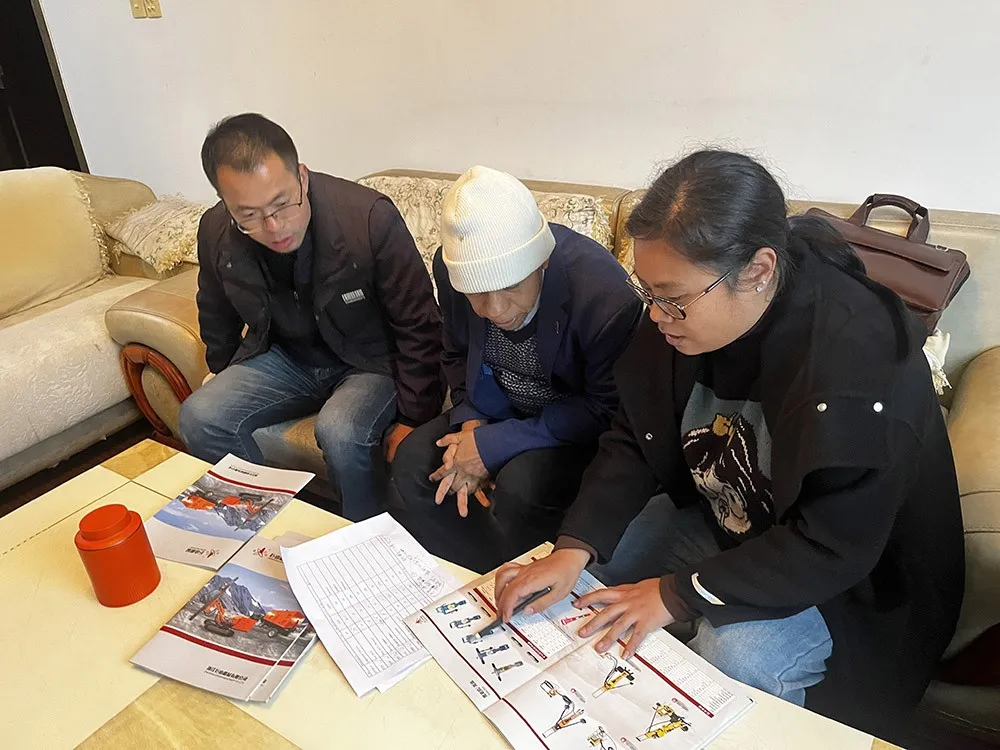
As the meeting wrapped up, Mr. Schmidt expressed his overall impressions. He noted that many suppliers he had visited in other countries focused solely on price negotiations or delivery lead times, but we had taken the extra step to demonstrate the inter‑dependency of our equipment lines. He remarked: “Today, I not only inspected the ten compressors—which, by the way, passed all my acceptance criteria—but more importantly, I saw a complete, end‑to‑end quality control system. Your in‑house testing, your documentation, and your willingness to share performance data from real job sites tell me that you understand the harsh realities of our working environment. And the technical consistency from air compressors to rock drills gives me strong confidence that any future orders—whether for spare parts, additional compressors, or complete drilling packages—will be backed by the same level of engineering rigor.”
He also shared his vision for expansion in Bangladesh, where infrastructure projects like the Padma Bridge rail link and numerous coal‑fired power plants are driving a surge in demand for reliable construction equipment. He mentioned that his company is bidding on several large‑scale tunnels and highway projects, and he would like to propose our rock drilling machines to his project management team. We responded with equal enthusiasm, offering to send a dedicated application engineer to his sites for trial runs and operator training—a gesture he deeply appreciated.
Before departing, Mr. Schmidt posed for a group photo with our team, holding a small commemorative plaque. In his farewell words, he said: “True quality can stand up to any scrutiny—and I have seen that truth here today. This visit has turned a transactional order into a trustworthy partnership.” His statement resonated with all of us, because it perfectly encapsulates our corporate philosophy: we do not chase short‑term sales; we build lasting relationships through transparency, technical expertise, and a genuine commitment to solving our customers’ operational challenges.
This visit was not just a success for our sales team; it was a powerful testament to the evolving reputation of Chinese manufacturing in the international arena. For decades, “Made in China” was often associated with low cost but questionable quality. Today, as Mr. Schmidt’s experience shows, we are shifting that narrative—offering world‑class engineering, robust after‑sales support, and integrated solutions that rival any European or Japanese brand. Our factory’s investment in CNC machining centers, robotic welding lines, and automated testing rigs has paid off, enabling us to deliver consistent products that meet or surpass global standards.
We also take pride in our ability to customize. Mr. Schmidt’s compressors, for example, were fitted with heavy‑duty air filters and oversized radiators to cope with the dusty, high‑temperature conditions typical of Bangladesh’s dry season. We had also modified the control panel to display local language prompts and provided a full set of spare belts, filters, and sensor kits—all packed in moisture‑proof crates. These thoughtful details, though small, speak volumes about our customer‑centric approach.
As we see off Mr. Schmidt and his team, we are already planning the next steps: drafting a formal cooperation agreement for the rock drill trial, scheduling a follow‑up video conference to fine‑tune the compressor settings, and preparing a maintenance schedule for the first six months of operation. We are confident that this partnership will grow stronger with each project, because trust, once earned through tangible evidence, becomes the bedrock of mutual success.
In the competitive world of industrial equipment, a factory visit is often the ultimate test. Mr. Schmidt’s thorough scrutiny and his final, unreserved endorsement remind us that quality is not a slogan—it is a daily practice. We look forward to welcoming more international customers to our facility, and we hope that every visitor will leave with the same conviction: that when you choose us, you are not just buying a machine; you are investing in a reliable, knowledgeable, and dedicated partner for the long haul. This is the new face of Chinese manufacturing, and we are proud to carry that flag forward.
 Hot News
2025-12-03
2025-01-03
Copyright © Quzhou Mazellion Heavy Industry Technology Co., Ltd. All Rights Reserved — Privacy Policy

 EN
EN